Recommended

tripadvisor logo

Need Help Booking? Call Us

Larkya Peak Climbing

Larkya Peak Climbing

Overview

Trip Fact

Trip Name:

Larke Peak Climbing

Best Month:

Sep - Nov & Mar - May

Max Elevation:

6249m

Walking hours Per Day:

5 - 8 Hours

Trip Duration:

18

Trip Starts/Ends:

KTM-KTM

Trip Grade:

Challenging

Meals:

BLD

Accommodation:

Hotel/Teahouse & Tent

Group Size:

+2

Destination:

Manaslu Region

Experience the thrill of Larke Peak climbing in Nepal with this comprehensive guide. Learn about its height (6,249 m), climbing route via the Manaslu Circuit, suggested itinerary, difficulty level, permit requirements, cost, and best time to climb.

This climb is an excellent choice for those looking to push their limits in a remote and stunning part of the Himalayas. It offers the excitement of high-altitude mountaineering and a challenging, rewarding experience that blends cultural richness with breathtaking natural beauty.

Benefits of Booking Larke Peak Climbing with HPA

  • Quick response to all inquiries by email, WhatsApp, and Messenger
  • Provides clear details of the trekking package, including transparent cost breakdowns
  • Offer tailored itineraries based on client preferences and fitness levels with comprehensive package services.
  • High Pass Adventure prioritizes safety with well-trained guides, first aid kits, and emergency evacuation plans. 
  • Flexible and easy booking, reservation, and payment system
  • To meet all customers at Kathmandu International Airport for pickup and drop-off services
  • First aid medical kit and oxy-meter for checking pulse, heart rate, and oxygen saturation at higher altitudes during the trek, which may be necessary in certain cases
  • Regular health checks and acclimatization schedules minimize the risk of altitude sickness.
  • Easily arranges all logistics to ensure a hassle-free experience in Nepal for all clients
  • Complimentary extra luggage storage service provides throughout the trek
  • Arrangements of sleeping bag, down jacket, duffel bag, and walking pole (if you don't have your own)
  • Company T-shirt and warm hat as souvenirs for trekking, along with a tour certificate upon completing the trip

Lakre Peak Climbing Overview

Larkya Peak (also known as Larke Peak) is a trekking peak in the Manaslu region of Nepal. Situated near the Larkya La Pass on the Manaslu Circuit Trek, it stands at an altitude of 6,249 meters (20,505 feet) above sea level. Climbing Larkya Peak involves technical climbing and requires a good level of mountaineering skills and experience. Despite its challenges, climbing Larkya Peak is a rewarding adventure that offers stunning views of the Himalayas.

The Larkya Peak climbing route typically starts from Soti Khola or Dharapani, following the Manaslu Circuit Trek route. From Soti Khola, trekkers head towards the village of Samdo, where the trekking route diverges towards Larkya Peak Base Camp through Dharmasala.
The trek to Larkya Peak Base Camp involves passing through beautiful forests, villages, and alpine meadows. As trekkers ascend, they get stunning views of Manaslu, Himalchuli, and other peaks in the region. The base camp is usually set up near the moraine of a glacier, offering a good resting point before the summit push.

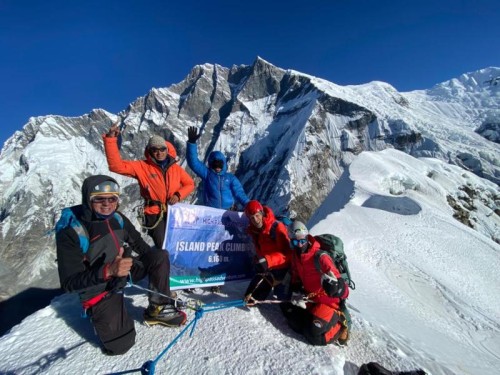
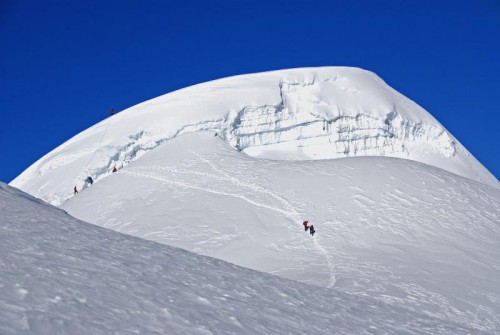
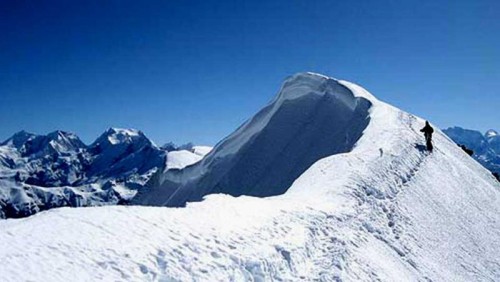
The final ascent to the summit of Larkya Peak is challenging, involving steep sections of snow and ice. Climbers need to be well-equipped and have prior mountaineering experience. The summit offers breathtaking panoramic views of the surrounding Himalayan peaks, making the climb a truly memorable experience.

Larke Peak Climbing Highlights 

  • Stunning Views surrounding landscape: Climbing Larkya Peak offers breathtaking panoramic views of the surrounding Himalayan peaks, including Manaslu, Himalchuli, Cheo Himal, and others. This provides a truly unforgettable and memorable experience for climbers.
  • Less Crowded trekking trail: Compared to other popular trekking peaks in Nepal, Larkya Peak Climbing is less crowded, offering a more peaceful and authentic Himalayan experience.
  • Combination with Manaslu Circuit Trek: Climbing Larkya Peak is often combined with the Manaslu Circuit Trek, which is known for its stunning landscapes, diverse flora and fauna, and rich cultural experiences. This combination allows you to experience the best of both trekking and climbing in the region.
  • Cultural Experience: The Larkya Peak climbing takes you through remote villages inhabited by ethnic Tibetan communities, providing an opportunity to experience the unique culture, traditions, and lifestyle of the local people.
  • Remote and Untouched Wilderness: The Manaslu region is less crowded compared to other trekking peaks in Nepal, but its offering a sense of wilderness and tranquility.
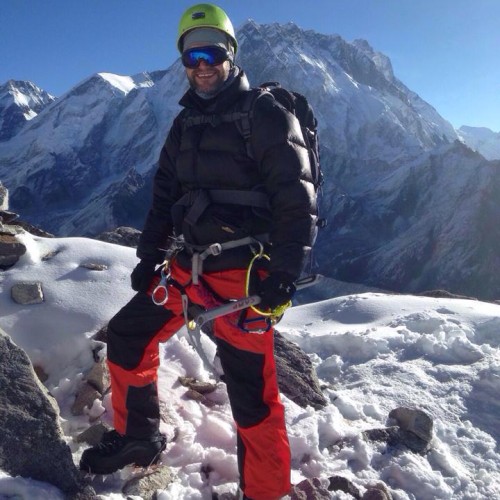
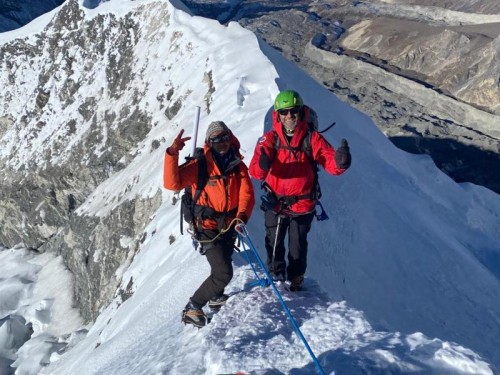
  • Adventure and Challenge: Climbing Larkya Peak involves technical climbing skills including using ropes, crampons, and ice axes as well as a challenging ascent, offering adventure enthusiasts an opportunity to test their skills and endurance in a remote and beautiful environment.
  • Sense of Achievement: Summiting Larkya Peak is a significant achievement and can be a source of pride and satisfaction, especially for those looking to push their limits and challenge themselves physically and mentally.

Why Choose the High Pass Adventure for Larke Peak Climbing?

Choosing High Pass Adventure for your Larkya Peak climbing expedition can offer several advantages, ensuring a safe, well-organized, and memorable experience. Their expertise and knowledge of the region can enhance your adventure, allowing you to fully enjoy the beauty and challenge of this Himalayan peak.

Local Expertise: High Pass Adventure is a local trekking and expedition company based in Nepal. Their guides and staff are experienced and knowledgeable about the region, ensuring a safe and well-organized climb.

Customized Itineraries: High Pass Adventure can make tailor the itinerary to suit your preferences, ensuring you get the most out of your Larkya Peak climbing experience.

Safety: Safety is paramount on any climbing expedition. High Pass Adventure provides experienced guides, high-quality equipment, and adheres to safety standards to ensure a safe climb.

Logistical Support: High Pass Adventure will assist with all aspects of your expedition, including permits, accommodation, transportation, and meals, allowing you to focus on the climb.

Cultural Experience: High Pass Adventure will incorporate cultural experiences into your itinerary, such as visits to local villages and interaction with the local communities, enhancing your overall experience.

Environmental Responsibility: High Pass Adventure is committed to responsible tourism practices, minimizing the environmental impact of your expedition.

Value for Money: High Pass Adventure offers competitive pricing for their services, providing good value for money compared to other expedition companies.

Larke Peak Climbing – Cost

The cost of the Larke Peak climb is USD 2,850 per person, based on our 19-day itinerary, for a minimum group of two people. This price includes all essential logistics such as a professional trekking and climbing guide, porter support, permits, transportation, meals, accommodation, and two nights of tented camp at Larke Peak Base Camp. You can find full details in the Cost Includes and Cost Excludes sections.

The overall cost may vary depending on several factors, including the trekking season, the trekking agency you choose, the number of climbing guides hired, starting and ending points, trip duration, group size, transportation options, and the level of service.

However, the cost does not include emergency evacuation, drinks, snacks, personal trekking and climbing gear, or upgraded luxury accommodation in Kathmandu or during the trek. We recommend requesting detailed quotations from multiple reputable trekking agencies to compare services and choose the option that best suits your budget and travel needs.

We guarantee reasonable pricing with high-quality service for the Larke Peak climb and Manaslu Circuit Trek. Our pricing is competitive and transparent, with no hidden costs. All essential services listed in the itinerary are included in the above cost, making your trip planning simple, clear, and hassle-free.

Larke Peak Base Camp - Climb Begins Here

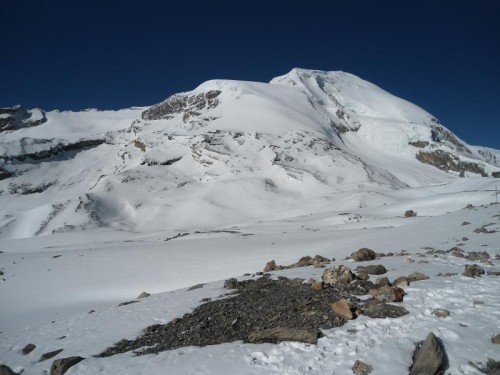
Larke Peak Base Camp marks the starting point for the exhilarating ascent of Larke Peak (6,249m). Surrounded by towering snow-capped peaks and rugged alpine terrain, and situated at an elevation of 5,100 meters, this base camp lies just below the famous Larkya La Pass. It offers a breathtaking staging ground for climbers—where the true adventure begins. There are no teahouse accommodations available at the base camp, so climbers must rely on fixed tented camps. From here, the summit push begins, presenting both technical challenges and rewarding panoramic views of the majestic Himalayas.

Rewards of the Larke Peak Climbing

Climbing Larkya Peak is a rewarding and unforgettable experience that offers a unique combination of adventure, challenge, natural beauty, and cultural immersion. From the summit of Larkya Peak, climbers are rewarded with breathtaking panoramic views of the surrounding Himalayan peaks, including Manaslu, Himalchuli, Cheo Himal, and others. Summiting Larkya Peak is a significant achievement that can boost your confidence and self-belief. The climb requires physical and mental strength, making reaching the top incredibly rewarding.

The climb to Larkya Peak is an adventure involving technical climbing skills and overcoming various challenges. It's a thrilling experience for adventure enthusiasts. The trek to Larkya Peak takes you through remote villages inhabited by ethnic Tibetan communities, providing a unique cultural experience and insight into the local way of life. Climbing Larkya Peak is a physically and mentally demanding challenge that pushes you beyond your limits, testing your endurance, resilience, and determination.

The trek and climb to Larkya Peak also take you through some of the most beautiful and remote landscapes in the Himalayas, allowing you to connect with nature in a profound way. Climbing Larkya Peak creates lasting memories and stories that you can share with others, making it an experience that stays with you for a lifetime.

Who Can Do the Larke Peak Climbing Trip?

Larke Peak is a more challenging climb compared to Island Peak and Mera Peak due to its remote location and rugged terrain. It is suitable for trekkers and climbers who possess good physical fitness, a strong mindset, determination, and a sense of adventure. Prior trekking or high-altitude climbing experience is recommended. Climbers should have basic mountaineering knowledge, including the use of crampons, harnesses, ropes, and an ice axe, as the journey involves walking 6–9 hours a day over difficult terrain for 14–15 days and sleeping at altitudes as high as 5,200 meters.

Larke Peak climbing is highly not recommended for complete beginners with no prior trekking or climbing experience, individuals with heart or lung conditions, or those prone to altitude-related health issues. It is also unsuitable for those unprepared for cold weather, camping, and the discomforts of high altitude.

However, aspiring climbers can prepare by training with multi-day hikes, strength and cardio exercises, and taking an introductory climbing course or attempting a lower-altitude peak first. It is essential to climb with a licensed climbing guide and a proper support team to ensure safety and manage logistics effectively.

Preparation for Larke Peak Climbing

Preparation is necessary for trekking and climbing in the Nepal Himalayas, including the Larke Peak Climbing. The 19-day itinerary for the Larke Peak Climbing with Manaslu Circuit Trek, from your arrival to your departure from Nepal, requires proper preparation to ensure safety, enhance your experience, and help you enjoy the trek and climb to its fullest.

The journey of Larke Peak Climbing with Manaslu Circuit Trek is relatively challenging but rewarding and it takes you through farmland, local Village, terraces, diverse landscapes, narrow trails, forests, rocky or muddy paths and the high altitude terrains. The trek and climb involves ascents and descents, requiring 5 to 7 hours of walking each day but takes 10 hours during the Larke Peak Climbing day, so careful physical preparation is main necessary.

Proper preparation for Larke Peak Climbing with the Manaslu Circuit Trek includes booking your trip with an experienced and reputable trekking agency, hiring an experienced climbing guide and staff, hiking to high elevations to reduce the risk of altitude sickness, undergoing basic climbing training, managing your budget, packing the appropriate gear for trekking and climbing, and building endurance and strength through activities such as walking, day hiking, running, biking, jogging, stretching, and swimming.

Another important aspect of preparation is to seek medical advice from a doctor before travel from your home, especially if you have respiratory concerns or other health issues such as food or drink allergies. Travel insurance is also essential for trek preparation; we recommend obtaining insurance that covers emergency evacuation during the Larke Peak Climbing with Manaslu Circuit Trek, as the trek takes place in a remote area where emergency medical care are difficult to access. By following these guidelines, you can successfully complete the 19 days Larke Peak Climbing with Manaslu Circuit Trek without any issues. 

Important Note for the trip:

  • During your pre-trip meeting in Kathmandu, we provide you with a free T-shirt and a warm cap (beanie), as well as a refundable duffel bag for packing your trekking gear.
  • We assign one porter for every two trekkers, so the duffel bag should weigh around 10 to 12 kg, which is carried by the porter throughout the trek. Additionally, we can arrange other working team members according to your requirements.
  • You must have your own special daypack with a waterproof cover for carrying your daily necessities things like cash, necessary papers, a water bottle or bladder, sunglass, mobile phone, power bank, a camera, toiletries, sunscreen, lip guard, a notebook, light clothing, etc. 
  • The guide will check your trekking gear and give you suggestions on what to pack and what not to pack. Any unnecessary items (non-trekking items) can be stored at the hotel or our office in Kathmandu.
  • A down jacket and a sleeping bag are required for trekking in the Nepal Himalayas. The sleeping bag should be rated for temperatures between -10 to 20 degrees Celsius, depending on the trekking route. If you don't have either of these items, you can rent them in Kathmandu for USD 2 per day. Please note that in case of loss or damage, you will be required to pay the cost of USD 100 per item.
  • Every day, the guide will brief you about the walk, nature, food, accommodation, culture, and other aspects of the trek. It's important to listen to and follow the local rules and guidelines provided by the guide.
  • Respect locals' privacy before photographing them or their children and appreciate the local culture and customs. Always walk together with your guide and stand in a safe place while animals are passing. Do not smoke or drink alcohol at elevations above 3000 meters. 

Important Note for Larke Peak Climbing:

The itinerary provided below is a general guideline for the Larke Peak Climbing trip. If you already have your own itinerary, we are flexible and happy to follow it. If not, we will gladly create a new itinerary tailored to your specific requirements and available vacation time. This trip can be customized according to your preferred duration, budget, and schedule.

The standard Larke Peak Climbing itinerary spans 19 days, including your arrival in and departure from Kathmandu. However, due to unpredictable weather conditions at high altitudes, the trip may not always be completed on time. Therefore, we highly recommend that all trekkers and climbers allocate at least two extra buffer days beyond the standard itinerary to ensure a successful and safe experience.
 

Larkya Peak Climbing Altitude Profile

Itinerary Expand All Close All

High Pass Adventure Pvt. Ltd. welcomes you to Nepal! Upon your arrival at Tribhuvan International Airport (TIA) in Kathmandu, one of our staff members will be waiting for you outside the baggage hall. Look for a person holding an A4-size paper with your name and our company name. This person will escort you to your hotel in Kathmandu from the airport. After checking in, take some rest, freshen up, and get ready for a meeting at our trekking office to discuss your program.

Food
Breakfast
Accomodation
Hotel
Elevation
1350

After enjoying your breakfast at the hotel, you will get ready for a Kathmandu Valley tour with an experienced tour guide. The tour includes visits to three out of seven UNESCO World Heritage Sites in Kathmandu Valley: Bhaktapur Durbar Square, Pashupatinath Temple, and Boudhanath Stupa. You will be transported to these sites in a comfortable private vehicle before starting a walking tour.

This tour offers fascinating insights into Buddhism, Hinduism, ancient art and historical architecture, as well as the lifestyle and culture of the people of Kathmandu Valley. After the tour, you will return to our office to finalize your trekking and climbing clothing and gear.

Food
Breakfast
Accomodation
Hotel
Elevation
1350

The Larke Peak Climbing and Manaslu Circuit Trek begins from Machha Khola, which can be reached by private or public vehicle. Our guide will arrive at your hotel in Kathmandu on time to pick you up. After breakfast at your hotel, you will travel to Machha Khola with your guide. The journey takes about 9 to 10 hours by public vehicle or 7-8 hrs by private Vehicle, passing through the stunning landscapes of the Nepali hilly region. The road can be bumpy, especially during the last 3 hours from Arughat to Machha Khola. Although the long drive may be tiring, it is richly rewarding with breathtaking scenery and a unique travel experience.

Food
BLD
Accomodation
Teahouse
Elevation
870

The trek starts from Machha Khola with wonderful scenery as you make your way to Jagat, passing through Khorlabesi, Tatopani, Dovan, Bklebhatti, Yaruphat, and lower Jagat. The trekking trail is relatively easy, following the newly constructed road along the riverside. You will walk and enjoy pleasant views of the surrounding jungle, occasional waterfalls, and suspension bridges, which add to the hiking experience. Jagat is the entry point of the Manaslu Conservation Area and is known for its scenic village setting, rugged landscape, and narrow paved lanes.

Food
BLD
Accomodation
Teahouse
Elevation
1400

Our trekking day starts with a walk through subtropical rainforest and a series of small local villages such as Salleri, Philim, and Eklebhatti. These villages are set amidst beautiful terraced fields. Along the way, you will get a chance to see the imposing Sringi Mountain before reaching Philim Village and crossing a suspension bridge.

Continuing on, the trail arrives at the junction of the Tsum Valley and Larke La Trek, then heads northwest to Deng through a lush green bamboo forest.

Food
BLD
Accomodation
Teahouse
Elevation
1860

It sounds like a perfect trekking day! You'll get to see the first real views of major mountains such as Sringi Himal, Ganesh Himal, Kutang Himal, and other peaks. Additionally, you'll have the opportunity to observe the culture and lifestyle of the highland people, as well as experience a variety of landscapes along the way.

Food
BLD
Accomodation
Teahouse
Elevation
2630

From Namrung, the trekking trail climbs up slightly and passes through lush green forests to reach Lihi village, known for its Chortens, barley terraces, and apple farms. Continuing on, we pass through Sho village before reaching Lho Village.

After a half-day hike to Lho, we will have plenty of time to enjoy the stunning views of Manaslu and other snow-capped peaks. We can also visit the Rebung Gompa, located on the hillside of Lho Village.

Food
BLD
Accomodation
Teahouse
Elevation
3175


After a two-hour hike uphill, we will cross the Shyala village, passing through a pine forest, before continuing on to reach Sama village. Shyala village offers fantastic views of Manaslu, North Manaslu, Himal Chuli, Nadi Chuli, Naike Peak, Kutang Himal, and Pangbuche Himal.

The day's hike to Sama Village is relatively short, allowing plenty of time to visit the monasteries and Birendra Lake once we arrive.

Food
BLD
Accomodation
Teahouse
Elevation
3550

When we reach an altitude above 3,000 meters, it's important to rest and acclimatize to the increasing altitude. The main attractions of the day are Pungyen Gompa, Manaslu Base Camp, and a short hike to Birendra Lake. We can decide whether to explore these areas based on our acclimatization and how we are feeling.

Food
BLD
Accomodation
Teahouse
Elevation
3550

The day's trek to Samdo Village may seem relatively easy in terms of terrain, but it can be challenging due to the significant increase in altitude. The trail follows the Budi Gandaki River through an alpine forest to a suspension bridge crossing the river. After crossing the bridge, the trail continues toward Samdo. The area can be quite windy, but we'll also have the opportunity to observe some stunning Himalayan views along the way.

Food
BLD
Accomodation
Teahouse
Elevation
3860

We start our journey by crossing a suspension bridge over the Budhi Gandaki River and begin hiking northwest to Larke Bazaar. In the past, this area used to host a successful market, but nowadays, little remains of it. As we ascend towards Larke Phedi through the juniper forest, we may experience some difficulties in breathing due to the shortage of oxygen at this high altitude.

This day consists of a short walk to Larke Phedi, which provides enough time for acclimatization for the further trek.

Food
BLD
Accomodation
Teahouse
Elevation
4460

Today, we have a short distance to cover, but it will take four to five hours of walking to reach Larke Peak Base Camp, due to its high elevation, where we will stay overnight. We'll need to carefully choose our campsite as the area is rocky and moraine-covered. The trek involves gradual ascent in small increments, which helps acclimatization to the altitude and reduces the risk of altitude sickness.

Food
BLD
Accomodation
Tent Camp
Elevation
5100

Before the actual climb, your guide will prepare you by reviewing safety procedures and roping techniques. The prevailing weather conditions will greatly influence the climb to the peak. However, it is in your best interest to be prepared for any eventuality. Your day on the peak will be the highlight of this trek. The physical exertion of reaching the peak will be rewarded with some of the most jaw-dropping views of the surrounding mountains. These memories will stay with you for a lifetime.

Food
BL
Accomodation
Tent Camp
Elevation
5100

It might happen that we may not reach the summit as planned due to unfavorable weather conditions. Our main goal is to successfully lead you to the summit of Larke Peak. Therefore, we will allocate a reserve day in case of bad weather or other unexpected situations. However, if everything goes smoothly, we can use this day for a leisurely trek back.

Food
BLD
Accomodation
Tent Camp
Elevation
5100

Today, we descend to Bimtang from Larke Peak Base Camp, a well-known trading post along the Tibetan salt route. The trail above Bimtang is rocky and moraine-covered, so we need to be careful during the descent. Along the way, you can enjoy views of the mountains and the glacial lake of Pungkar Tal (4100m).

Food
BLD
Accomodation
Tea-house
Elevation
3800

After breakfast, enjoying the splendid views of the mountains, we descend towards a high pasture and gradually leave behind the alpine climate as we pass through familiar pine and rhododendron forests. Along the way, we may have the chance to see wildlife and birds before reaching Tilche village.

Food
BLD
Accomodation
Tea-house
Elevation
2300

We will depart from the beautiful Gurung village of Tilche and cross a suspension bridge over the Dudh Khola, then follow the lower valley to Dharapani. Dharapani is the checkpoint for the Manaslu Circuit and Annapurna Circuit Trek permits. After our permits are checked, we will take a jeep or bus to Besisahar, which is about a 3-4 hour drive, and have lunch there.

After lunch in Besisahar, we will drive along the banks of the Marsyangdi and Trishuli Rivers, enjoying the beautiful scenery of rice fields, terraced farms, valleys, and refreshing views of the hilly areas and mountains. After a 5-hour drive, we will reach Kathmandu, where we will spend the last night of our journey in Nepal.
 

Food
BLD
Accomodation
Hotel
Elevation
1350

This is the last day of your trip to Nepal. A member of the High Pass Adventure staff will take you to Kathmandu International Airport for your departure flight according to your schedule. If you wish to extend your trip to Nepal, Tibet, Bhutan, or India, High Pass Adventure will be happy to assist you in planning your next adventure.

Food
Breakfast

What Is Included ?

High Pass Adventure have working best guide and porter. We are providing an excellence service to our customer. All our costs are net and very clear on cost include-excludes. We have paid best salary to Trekking, Tour guide and porter which is more than government fixed amount. Our entire customers are satisfied from our service. For the more details please feel free to contact us.

Cost Includes 

  • Airport Pick up & drop by private vehicles
  • 3 night's Hotel in Kathmandu with breakfast (three stars)
  • Kathmandu-Arughat- Sotikhola by private jeep
  • Dharapani- Besisahar-Kathmandu by private vehicle
  • 3 meals per day during the trek (Breakfast, Lunch & Dinner) and one cup of tea per meal
  • All food during the climbing
  • Accommodation on Tea-house during the trekking
  • Two nights tent camp during the climbing
  • An experience English Speaking trained, Government license Holder Guide
  • Experienced climbing guide
  • All applicable taxes as per the government rules and regulations
  • All the applicable permits for trekking and climbing
  • First Aid medical kit, Oxymeter to check pulse, heart rate and oxygen saturation at higher altitude
  • Guide and porter salary, Food, accommodation and insurance during the trek
  • Usage of a down jacket, sleeping bag, duffel bag, and walking poles (if you don't have your own) will incur a $8 USD charge each for maintenance and washing, which will be returned after the trip is completed.
  • Tour Certificate, Company T-shirt as a Souvenir
  • Farewell dinner in Nepali restaurant with culture program
     

What Is Excluded?

  • Nepal visa fee and your International flights
  • Lunch and dinner in Kathmandu
  • Extra night hotel accommodation in Kathmandu
  • Extra trekking days other then itinerary
  • All personal trekking and climbing gears
  • Travel insurance and Mountain rescue service (covers emergency Rescue and Evacuation)
  • Personal expenses (phone, laundry, water, bar drinks, battery recharge, hot shower etc.)
  • Entrance fees of the Monasteries, museum and temple during the trekking and sightseeing in Kathmandu
  • Tips to Trekking staff (Tips is expected)
  • Any other expenses that aren’t mentioned in the section above
     

Route Map

route map

FAQs

The best time for Larke Peak climbing is during the pre-monsoon (spring) and post-monsoon (autumn) seasons in Nepal.

Spring (March to May): This is usually considered the best time for climbing Larke Peak. The weather is stable, with clear skies and mild temperatures, making for ideal climbing conditions. The spring season also offers beautiful views of blooming flowers and rhododendron forests.

Autumn (September to November): Another excellent time for Larke Peak climbing, autumn provides clear skies, stable weather, and mild temperatures. The post-monsoon period is also less crowded than the spring season, providing a more peaceful climbing experience.

During both seasons, the temperatures are generally more moderate, and the skies are clearer, offering better visibility of the surrounding mountains. However, it's important to be prepared for changing weather conditions, as weather in the mountains will be changeable.
 

The duration of a Larke Peak climbing trip is vary depending on several factors, including the route taken, the acclimatization schedule, and the weather conditions. However, a typical Larke Peak climbing trip usually takes around 17 to 20 days.

Here is a rough outline of a common itinerary for Larke Peak climbing:

Day 1-2: Arrival in Kathmandu, trip preparation, and sightseeing.
Day 3-8: Drive from Kathmandu to Soti Khola, and trekking through villages like Machha Khola, Jagat, Deng, Namrung, and Samagaon, acclimatizing along the way.
Day 9-11: Trek from Samagaon to Larke Peak Base Camp, set up high camp, and rest/acclimatize.
Day 12-14: Summit day for Larke Peak and descend back to Base Camp.
Day 15-18: Trek to Tilche village via the Larke Pass, Bhimthang and drive back to Kathmandu.
Day 19: Departure from Kathmandu.
 

The difficulty level of Larke Peak climb is considered moderate to challenging. While Larke Peak is not among the highest peaks in Nepal, reaching an altitude of approximately 6,249 meters (20,502 feet), the climb involves several challenges that require a good level of physical fitness, mountaineering skills, and high-altitude trekking experience.

Proper preparation, including physical training, acclimatization, and using experienced guides, is necessary for a successful climbing the Larke Peak.
 

Climbing Larke Peak, like any high-altitude trekking and climbing activity, comes with natural risks due to crevasses, rocky terrain at high altitudes, and icy gravel along the ascending route. However, with proper preparation, safety measures, and experienced guides, it can be a safe and rewarding adventure.

Yes, you will need permits for Larke Peak climbing. The permits required depend on the specific itinerary and the region you will be trekking in. 

Manaslu Restricted Area Permit, Manaslu Conservation Area Project (MCAP) Permit, Annapurna Conservation Area Project (ACAP) Permits and TIMS Card permits are the required for the Larke Peak Climbing. 

To obtain all the necessary permits for restricted areas like Larke Peak, it's essential to go through a registered trekking agency, as independent trekkers are not allowed in these areas. Your trekking agency, High Pass Adventure, will handle the permit process for you as part of your trekking package.
 

The base camp for Larke Peak climbing is situated at the foot of Larke Peak in the Manaslu region of Nepal. Larke Peak is often climbed in conjunction with the Manaslu Circuit Trek, and the base camp is typically set up near the left side of Larke Pass, the highest point of the Manaslu Circuit Trek, at an altitude of around 5,106 meters (16,752 feet). The exact location of the base camp of Larke Peak varies depending on the route and the expedition's logistics.
 

Larke Peak, also known as Larkya Peak, is a trekking peak in the Manaslu region of Nepal. It is situated near the Larke Pass on the left side of the Manaslu Circuit Trek route. The peak stands at an altitude of approximately 6,249 meters (20,502 feet) and provides a challenging yet rewarding climbing experience.

Yes, Larke Peak is indeed considered a demanding climb. Although it is not among the highest peaks in Nepal, reaching an altitude of approximately 6,249 meters (20,502 feet), it still requires a high level of physical fitness, mountaineering skills, and acclimatization. The climb involves steep ascents, technical sections, and high-altitude challenges. Proper preparation, including physical training, acclimatization, and the use of experienced guides and equipment, is necessary for a successful climb of Larke Peak.

Climbing Larke Peak is generally not recommended for beginners. While it is not among the most technical climbs in Nepal, it still requires a good level of mountaineering experience, physical fitness, and high-altitude trekking experience. The ascent involves steep sections, glacier crossings, and high-altitude challenges that can be demanding for those without prior climbing experience.

If you are a beginner climber interested in climbing in Nepal, it's advisable to start with less challenging peaks and gradually build your skills and experience before attempting peaks like Larke Peak.


Yes, all climbers require an experienced climbing guide, and fixed ropes are necessary in certain sections prior to summit day, as climbing Larke Peak is a true adventure that involves technical mountaineering skills and presents various challenges.

To safely fix the rope and ensure a successful ascent, a minimum of two experienced climbing guides is essential—this is necessary even if there is only one climber. Without adequate guiding support, summiting Larke Peak becomes extremely difficult, if not impossible.

Yes, Larke Peak climbing can be done together with the Manaslu Circuit Trek because Larke Peak lies along the Manaslu Circuit route near Larke Pass. The standard Manaslu Circuit Trek takes 12 days, from Kathmandu to Kathmandu, and requires an additional 3 days for Larke Peak climbing. Combining both adventures into one trip is more cost-effective and convenient for trekkers, as it reduces overall logistics and expenses.

The cost of Larke Peak climbing is USD 2,850 per person, based on our 18-day itinerary, with a minimum group size of two people. This price includes all essential logistics, such as a professional trekking and climbing guide, porter support, permits, transportation, meals, accommodation, three nights’ stay in Kathmandu, sightseeing in the Kathmandu Valley, and two nights of tented camp at Larke Peak Base Camp with all meals provided. Full details can be found in the Cost Includes and Cost Excludes sections.

Booking the Larke Peak Climb with High Pass Adventure offers many benefits. We provide complete and accurate information through email or WhatsApp, offer affordable and transparent pricing for all trekkers and climbers, and arrange the best accommodation and meals during the trek and your stay in Kathmandu.

We manage all logistics, including transportation, permits, experienced guides, and porter services. Our commitment is to deliver the highest level of service, ensuring that every client completes the trip safely and without problems. With a 99% trip success rate, many of our clients recommend us to others and return to trek with us again.

During the Larke Peak Climbing, accommodation includes hotels, guesthouses, teahouses, and tented camps. In Kathmandu, you will stay in a comfortable hotel. Along the trekking route up to Dharamsala (Larke Phedi), teahouses provide basic accommodation and meals. These teahouses usually offer dormitory-style rooms with shared bathrooms. While facilities are basic, they provide a comfortable place to rest and recharge.

As you move closer to Larke Peak Base Camp, accommodation shifts to tented camps. We at High Pass Adventure provide all necessary camping equipment, including tents, sleeping bags, and mattresses. Camping offers a more remote and adventurous experience and requires careful preparation and organization.

Regarding food, basic meals are available throughout the trip, including both local and Western options such as rice, potatoes, noodles, pasta, eggs, and bread.

Transportation for Larke Peak climbing can be either private or public. In our standard itinerary and cost, all transportation is arranged by private vehicle, from arrival in Kathmandu to departure, including transfers from Kathmandu to Machha Khola and from Tilche to Kathmandu. Depending on group size, private transport may be provided by car, jeep, Hiace, or bus.

If trekkers or climbers wish to reduce the overall cost, they may choose to use public transportation for certain sections of the journey, such as from Kathmandu to Machha Khola and from Tilche back to Kathmandu.

The Larke Peak climbing route is relatively busy up to Larke Peak Base Camp because it follows the same trail as the Manaslu Circuit Trek. During the peak trekking seasons—spring (March–May) and autumn (September–November)—you will encounter many trekkers along the route. However, only about 10% of trekkers attempt the Larke Peak climb.

Beyond Larke Peak Base Camp, the climbing route becomes much quieter, as fewer people continue toward the summit. This section requires proper preparation, including hiring an experienced climbing guide and using fixed ropes.

In contrast, during the summer and winter seasons, the trails are far less crowded due to unfavorable weather conditions, limited mountain views, and more challenging climbing conditions.

Yes, travel insurance is essential for all trekking and climbing routes in Nepal. This trip is challenging and takes place in remote areas, and without valid travel insurance it may be difficult to obtain climbing permits. Your insurance must cover high-altitude trekking and emergency evacuation up to the maximum elevation of your trek, including 6,249 meters for Larke Peak. If needed, we can recommend reputable travel insurance companies to ensure you are fully covered and secure during your adventure.

We provide refundable trekking gear such as walking poles, sleeping bags, down jackets, and duffel bags. However, you should bring the rest of your personal trekking gear yourself.

For the climbing portion, we provide ropes, ice axes, and camping tents. Other specialized climbing equipment—such as boots, harnesses, figure-eight descender, carabineers, helmets, and similar gear—must be arranged by you. If you do not have this equipment, it can be purchased or rented in Kathmandu.

Yes, Wi-Fi is available at most teahouses up to Samdo, usually for an additional fee. However, the signal is often weak and unreliable. Beyond Samdo—such as at Dharamsala and Larke Peak Base Camp—there is no Wi-Fi or mobile network coverage.

Mobile data works in limited areas, similar to Wi-Fi, but coverage is inconsistent along the route. We advise trekkers not to rely on internet access for communication during the trek, as connections are generally slow and unreliable.

You can purchase an Ncell or Nepal Telecom SIM card, but even with these providers, network coverage is not strong throughout the entire trekking region.

Yes, you can charge your electronic devices at most lodges during the Larke Peak Climb Trip up to Samdo and from Bhimthang, usually for an additional fee. Charging is not available at Dharamsala and Larke Peak Base Camp.

At higher elevations, charging facilities are limited due to fewer teahouses and a small number of charging points. Therefore, we highly recommend bringing a power bank or a portable solar charger to keep your mobile phone and camera charged while trekking in the Nepal Himalayas.

Yes, you should bring basic and prescribed medicines from your home country for the Larke Peak climb and the Manaslu Circuit Trek. Since the trekking and climbing routes are remote, medical facilities are limited, and local medicines may not be suitable for all travelers, especially foreigners.

If you have any allergies or existing medical conditions, it is important to consult your doctor or a healthcare professional before traveling. They can advise you on the necessary medications based on your health condition and the high-altitude environment of the trek.

High-altitude sickness, also known as Acute Mountain Sickness (AMS), is a common concern when trekking and climbing at high elevations. While the risk cannot be completely eliminated, it can be significantly reduced by following proper prevention measures. Including adequate acclimatization days in the itinerary also helps minimize the risk during the Larke Peak climb.

Follow these guidelines to help prevent altitude sickness:

  • Drink plenty of water
  • Ascend slowly and steadily
  • Take regular rest breaks
  • Avoid alcohol and smoking
  • Eat regular meals rich in carbohydrates
  • Go high and sleep low whenever possible
  • Take prescribed medication (such as Diamox/Acetazolamide) only after consulting a doctor

By following these precautions and listening to your guide, you can greatly reduce the chances of altitude sickness and enjoy a safer, more comfortable trekking and climbing experience.
 

Yes, tipping guides, porters, and climbing guides is customary and expected in Nepal, and the same rule applies to the Larke Peak climb. They truly appreciate tips, as these team members play a vital role in the safe and successful completion of your trek and climb. Your tip is a meaningful way to recognize their hard work, dedication, and support throughout the journey.

As a general guideline, tipping around 10–15% of the total trip cost is recommended. Tips are usually given at the end of the trip and shared among the trekking and climbing staff. They are collected from all trekkers and climbers and distributed to the support team. Accepted currencies include USD, Euro, Nepali Rupees, and British Pounds.

Traveller Useful Information

Larke Peak Climbing Difficulty

Larkya Peak is considered a challenging climb, requiring basic mountaineering skills such as the use of crampons, ice axe, and ropes. It is best suited for experienced climbers with previous high-altitude climbing experience. The difficulty of the climb varies depending on factors such as weather conditions, route conditions, and individual fitness levels.
Some these are important factors that add to the difficulty level of climbing Larkya Peak such as:

Altitude: Larkya Peak has an elevation of 6,249 meters (20,505 feet) above sea level. Climbers must acclimatize properly to avoid altitude sickness and other high-altitude-related issues.

Technical Terrain: The climb to Larkya Peak involves technical climbing skills, including the use of ropes, crampons, and ice axes. Climbers should be skillful in these techniques.

Weather Conditions: Weather in the Himalayas can be unpredictable, with conditions changing rapidly. Climbers must be prepared for extreme cold, high winds, and snowfall.

Physical Fitness: Climbing Larkya Peak requires a high level of physical fitness and stamina. Climbers should be able to hike for several hours a day at high altitudes while carrying a heavy pack.

Remote Location: Larkya Peak is located in a remote area of Nepal, far from medical facilities and other amenities. Climbers must be prepared to be self-sufficient and handle emergencies.

Route Finding: The route to Larkya Peak may require good route-finding skills, especially in areas with complex glacier systems or challenging navigation.

Acclimatization to reduce the Altitude Sickness for the Trip

An acclimatization day is necessary during the 16-day Larke Peak climbing with Manaslu Circuit Trek because it is need to reaching 6,249 meters. The trek starts at 750 meters at Soti Khola and gradually climbs to Larke Peak Base Camp at 5,100 meters, passing through villages, forests, and other high-altitude places. As you ascend, oxygen levels and air pressure decrease compared to sea level. Once you reach an altitude above 3,500 meters, you may experience symptoms of altitude sickness, such as nausea, vomiting, diarrhea, headaches, loss of appetite, tiredness, dizziness, and sleeplessness.

When ascending to 3,500 meters, be honest with your guide about how you are feeling. Your guide will advise you to walk slowly and may suggest sleeping at a lower altitude before ascending further.

Samagaun is designated as our acclimatization rest day in the Larke Peak Climbing itinerary. This rest day and gradual ascent help prevent altitude sickness and allow you to adapt to the environment. If you experience any symptoms of altitude sickness during the Larke Peak climb and Manaslu Circuit Trek, it is important to address them immediately to avoid complications. To prevent these issues, follow your guide's instructions, as they are knowledgeable about high-altitude sickness. This process, known as acclimatization, helps reduce the risk of altitude sickness. 

To prevent altitude sickness, you should follow the itinerary closely, as proper acclimatization helps your body adapt to higher elevations. Additionally, stay hydrated by drinking plenty of water, eat a well-balanced diet with sufficient carbohydrates, maintain a comfortable pace, and avoid alcohol and sedatives. By adhering to these guidelines, you can reduce the risk of altitude sickness and have a safer and more enjoyable trek on the Larke Peak climbing and Manaslu Circuit Trekking. However, if you continue to feel unwell despite following these recommendations, you should return to a lower altitude.

About Diamox — a medicine for high altitude sickness

Diamox is the brand name for Acetazolamide, a medicine that helps prevent and treat altitude sickness (Acute Mountain Sickness, AMS). When trekkers ascend to higher elevations, oxygen levels decrease. Taking Diamox helps your body adjust faster to high altitudes by stimulating deeper and faster breathing, allowing you to take in more oxygen. Diamox works by making your blood more acidic, which signals your body to breathe faster at high elevations. This helps reduce symptoms such as headaches, nausea, and dizziness.

Based on our experience and advice from our altitude doctor, if trekkers have previous high-altitude trekking experience (around 4,000 to 5,000 meters) in Nepal, there is usually no need to take Diamox. However, if trekkers are trekking at these altitudes for the first time, it is recommended to start taking half a tablet of Diamox from the first day of the hike.

For example, all trekking route in Nepal, where the maximum elevation is 4,500 to 5500 meters, it is advisable to start taking Diamox from the first day of the trek. After taking Diamox, some people may experience side effects such as tingling sensations in the skin. Therefore, it is important to drink at least 4 liters of water per day while trekking and taking Diamox.

Important Notes

  • Diamox is not a cure — it just helps prevent or lessen AMS.
  • Stay hydrated — Diamox acts as a diuretic (you'll pee more!).
  • Common side effects: Tingling in fingers, frequent urination, and slight taste changes.
  • Always ascend slowly, even with Diamox.
  • Never use Diamox as an excuse to climb too fast!

Requires Permits for Larkya Peak Climbing 

Climbing Larkya Peak requires a climbing permit issued by the Nepal Mountaineering Association (NMA), as well as trekking permits for the Manaslu Conservation Area (MCAP), Annapurna Conservation Area (ACAP), and Manaslu Restricted Region.

Trekking to Larkya Peak climbing without the required permits is not recommended and is against the regulations set by the Nepalese government. Permits are necessary for climbing any peak in Nepal, including Larkya Peak, to ensure safety and environmental conservation.

Attempting to trek to Larkya Peak without the necessary permits can result in fines, legal issues, and difficulties with local authorities. It's important to follow the regulations and obtain the required permits before starting on any trekking or climbing expedition in Nepal.

Requiring permits for Larke Peak Climbing are given below:- 

Manaslu Restricted Area (RAP) Permit  

  • It cost: USD 75 per person for the first seven days and an additional USD 10 each day from December for all nationality
  • It cost: USD 100 for the first seven days and an additional USD 15 each day from September to November for all nationality

Manaslu Conservation Area Project (MCAP) Permit 

  • It Cost: US$ 30 per person, per trek for all foreigners
  • It Cost: US$ 10 per person for SAARC (South Asian Association for Regional Cooperation) citizens

Annapurna Conservation Area Project (ACAP) Permit 

  • It Cost: US$ 30 per person, per trek for all foreigners
  • It Cost: US$ 10 per person for SAARC (South Asian Association for Regional Cooperation) citizens

Chum Nubri Rural Municipality Entrance fees: 

  • Cost:NPR 1,000 for foreign visitors and NPR 200 for local travelers per person.

Larke Peak Climbing Permits:

  • It Cost: US$ 125 per person for December, January, February, June, July, and August
  • It Cost: US$ 175 per person for September, October, and November
  • It Cost: US$ 300 per person for March, April, and May

Best Season for Larkya Peak Climbing: 

The best season for climbing Larkya Peak is during the pre-monsoon (spring) season from March to May and the post-monsoon (autumn) season from late September to November. These seasons offer the most stable weather conditions and the clearest skies, providing most favorable climbing conditions.

During the spring season, the weather is generally mild, and the days are longer, allowing for more daylight hours for climbing. The post-monsoon season offers similar conditions, with clear skies and stable weather, making it an excellent time for climbing.

Both seasons also offer beautiful views of the surrounding Himalayan peaks, including Manaslu, Himalchuli, and Cheo Himal, enhancing the overall climbing experience. It's important to note that while these seasons are considered the best for climbing Larkya Peak, weather conditions in the Himalayas can be unpredictable, so it's essential to be prepared for changing conditions.

Accommodations for Larkya Peak Climbing

During a Larkya Peak climbing expedition, accommodation is typically in teahouses or camping. Here's what you can expect: a teahouse trek to Larke Phedi, with three nights at Larkya Peak Base Camp recommended

Teahouses: Along the trekking route to Larkya Peak Base Camp, there are teahouses that provide basic accommodation and meals. These teahouses usually have dormitory-style rooms with shared bathrooms. The facilities are basic but provide a comfortable place to rest and recharge.

Camping: As you move closer to Larkya Peak Base Camp, you'll likely stay in tents. We (High Pass Adventure) will provide camping equipment, including tents, sleeping bags, and mattresses. Camping allows for a more remote and adventurous experience, but it also requires more preparation and organization.

Larkya Peak Base Camp: At Larkya Peak Base Camp, you'll stay in a tented camp set up by us (High Pass Adventure). The base camp is usually situated near the moraine of a glacier, providing a temporary home as you acclimatize and prepare for the summit push. This camp also serves as a closer starting point for the summit attempt.

Larke Peak Climbing – Food Options

During the Larke Peak climbing, the food will be basic but provide a more modern style of meals at the teahouses up to Samdo and after Bhimthang. The menu includes both local and Western options such as rice dishes, potato dishes, noodles, pasta, eggs, porridge, momo, pizza, stew, and bread.

Please note that the taste may not be exactly the same as Western food due to the Himalayan and remote location, but the teahouses do their best to prepare similar meals.

You can choose your meals from the menu at each location, and most places offer similar food items. As you go higher in altitude, food prices increase. In the lower regions, fresh and organic local food is available, while at higher elevations, the menu becomes more basic and limited.

Therefore, we highly recommend that all trekkers and climbers bring some energy bars and light snacks from the city.

Hire a experienced Climbing Guide for Larke Peak Climb

Larke Peak is situated at 6,249 meters in the remote Manaslu region and is less frequently climbed. The climbing route is challenging to find due to its limited use, making it essential to hire an experienced climbing guide. The route to Larke Peak Base Camp involves navigating dense forests and alpine terrain at higher elevations. Finding the right path can be mentally challenging and make the journey more demanding. An experienced guide will help ensure you stay on track and manage the trek and climb safely. A guide is invaluable for ensuring you reach your destination successfully and with minimal stress, assisting with navigation and supporting you every step of the way.

To safely fix the rope and ensure a successful ascent, a minimum of two experienced climbing guides is essential—this is necessary even if there is only one climber. Without adequate guiding support, summiting Larke Peak becomes extremely difficult, if not impossible.

At Larke Peak Base Camp, suitable camping areas are limited, so it is crucial to identify and establish a safe and reliable campsite—something that only an experienced climbing guide can efficiently manage. An experienced guide is also essential for finding the correct climbing route and ensuring a safe and successful ascent of Larke Peak.

With years of experience leading climbs on Larke Peak, we are proud to report a 70% success rate among our climbers. With the right preparation and support team, including two skilled climbing guides, your summit attempt has a strong chance of success.

In addition to route navigation and climbing assistance, the guide will explain the local culture and natural surroundings, facilitate interactions with local people, and ensure a stress-free journey. They will also manage accommodation, food, transportation, and permits throughout the trip, and provide assistance in any situation. Our team of experienced and professional guides is dedicated to making your trek as comfortable and stress-free as possible, with full responsibility, care, honesty, and kindness.

Travel Insurance for Larke Peak Climbing and the Manaslu Circuit Trek

Travel insurance is essential for all trekking and climbing routes in Nepal to protect your life and finances. This trip is challenging, takes place in remote areas, and involves risks such as altitude sickness and other injuries.

Your insurance must cover medical care, hospital treatment, high-altitude trekking, and emergency evacuation up to the maximum elevation of your trek, including 6,249 meters for Larke Peak. If needed, we can recommend reputable travel insurance companies to ensure you are fully covered and secure during your adventure.

Having the right travel insurance is a crucial safety measure for the Larke Peak climbing journey. By obtaining proper coverage, you can focus on the trek with peace of mind, knowing that the insurance will cover costs in case of illness, injury, lost items, or delayed flights.

Larke Peak Climbing – Charging Electronic Devices

Electricity is available to charge your electronic devices at most lodges during the Larke Peak climbing trip up to Samdo and again from Bhimthang. Charging is usually available only in the dining hall (not in the rooms) and requires an additional fee.

Charging facilities are not available at Dharamsala and Larke Peak Base Camp due to the remote location.

At higher elevations, charging facilities are very limited because there are fewer teahouses and only a small number of charging points, and many trekkers and climbers need to charge their devices.

Therefore, we highly recommend bringing a power bank or a portable solar charger to keep your mobile phone and camera charged while trekking in the Nepal Himalayas.

Larke Peak Climbing – Wi-Fi and Internet

Wi-Fi is available at most teahouses up to Samdo and again from Bhimthang, usually for an additional fee. However, the signal is often weak and unreliable. Wi-Fi generally works only in the dining hall, not in the rooms. If your room is close to the dining hall, the connection may work.

Beyond Samdo—such as at Dharamsala and Larke Peak Base Camp—there is no Wi-Fi or mobile network coverage.

For mobile data (4G), you will need to purchase a Nepali SIM card (NCELL or Nepal Telecom) in Kathmandu. Mobile data works in limited areas, similar to Wi-Fi, but coverage is inconsistent along the route.

We advise trekkers not to rely on internet access for communication during the trek, as connections are generally slow and unreliable. In case of an emergency, our guide will assist trekkers and climbers in arranging phone or internet access to contact their families.

Tipping information 

The trekking and climbing guide, as well as the porter, is essential to the success of the trip, ensuring that it is completed smoothly and without issues. Tipping is an important aspect of trekking in Nepal, as it acknowledges and appreciates the hard work of the local staff who assist you throughout your journey. It is customary to tip at the end of the trek, and you should gather all team members (guide, porter, assistant guide) together to distribute the tip. Tips are generally given in cash, preferably in US dollars or Nepalese rupees, and it is best to use small denominations to facilitate easier distribution

While the typical guideline is to tip around 10% of the total payable amount, you can adjust this based on the quality of service provided. Recommended tipping amounts are as follows:

  • Guide: $12-$15 per day
  • Porter: $8-$10 per day
  • Assistant Guide: $8-$12 per day
  • Climbing Guide: $ 200 (whole trip)

These tips are highly recommended to motivate the team and reward them for their outstanding service, contributing to a memorable and inspiring experience.

Trekking and climbing equipment for Larke Peak Climbing

Travel equipment is essential to pack before your trip. Below is the recommended packing list. We understand it may seem like a lot to carry from home, so we suggest packing light and bringing only the necessary items. If you’re missing something, you can hire or buy it in Kathmandu, especially around Thamel.

These general items are suitable for all seasons while trekking in Nepal, but the list may vary depending on the season and the duration of your chosen trek. Therefore, it’s important to ask your trekking organizer for a detailed packing list specific to your trek. They will provide you with clear information about what to bring.

Trekking and climbing equipment for Larkya Peak climbing are varying depending on the specific itinerary and the time of year you plan to climb. 

Here is a general list of essential equipment:

Clothing:

  • Insulated jacket
  • Sleeping bag (rated for cold temperatures)
  • Sleeping pad
  • Fleece jacket or pullover
  • Waterproof jacket and pants
  • Trekking pants
  • Thermal base layers
  • Moisture-wicking t-shirts
  • Warm hat and gloves
  • Sun hat and sunglasses
  • hiking boots
  • Socks (wool or synthetic)

Climbing Gear:

  • Mountaineering boots
  • Crampons
  • Ice axe
  • Climbing harness
  • Climbing helmet
  • Locking carabineers
  • Trekking poles

Other Essentials:

  • Daypack
  • Water bottles or hydration system
  • Water purification tablets or filter
  • Snacks and high-energy foods
  • Sunscreen and lip balm
  • First aid kit
  • Personal hygiene items
  • Map and compass or GPS

It's essential to pack light but ensure you have all the necessary gear for safety and comfort. The weather in the Himalayas can be unpredictable, so it's important to be prepared for various conditions. It's also recommended to consult with a reputable trekking agency and trek with an experienced guide. Guides can provide guidance on the specific gear you'll need for your expedition.


Client Reviews

Robert Mikovec

Robert Mikovec

Czech Republic

Get involved again Larke Peak Climbing

7th August, 2024

This adventure on the Manaslu Circuit Trek with Larke Peak climbing in April 2024 was truly amazing. The team from High Pass Adventure was experienced and very professional. The trip was much better than expected, offering great value for money while being comfortable and safe. The team was very friendly. I will definitely come back for another trek with peak climbing with them.

Price From US$ 2850per/person

US$ 2900

You Want to Plan Your Trip to, Larkya Peak Climbing

  • Best price guaranteed
  • No booking fees
  • 99% Repeted Clients

Get Free Quotes , Tailor Your Trip

Similar Trips

Enjoy the popular trekking and tour packages in Nepal Himalayas. 2026.

ASSOCIATED WITH

  • partner
  • partner
  • partner
  • partner
  • partner

Find & Follow Us on

WE ACCEPT